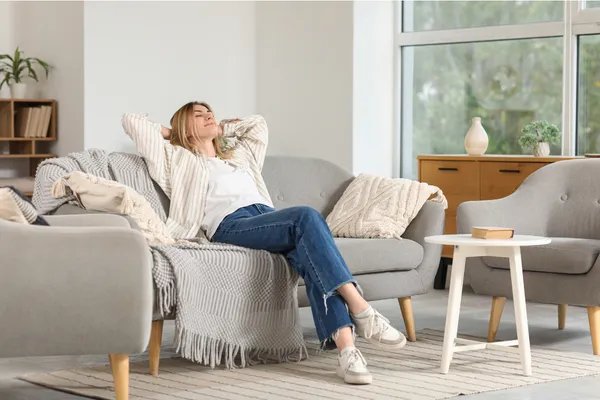
Does your home help you live well?
Creating spaces that support the life you want to live
Take a look around your home for a minute.
Maybe you love what you see. Maybe you immediately notice the pile of mail on the counter, the shoes by the door, or the drawer you’ve been meaning to clean out for six months.
Now try looking at your home in a completely different way.
Instead of asking how it looks, ask: Does my home help me live well?
It’s a surprisingly interesting question.
Our homes are the settings for so much of everyday life. We sleep there. Eat there. Get ready for our days, and recover from the long ones there. We have conversations, celebrate birthdays, pay bills, watch television, care for people we love, make plans, lose our keys, and occasionally spend 20 minutes looking for something we know we put somewhere “safe.”
The spaces around us are constantly interacting with the way we live.
And research increasingly suggests that our physical environments can influence our stress, attention, sleep, mood, and health behaviors. Light, noise, access to nature, air quality, clutter, and the way spaces function can all play a role in our well-being.
That gives us an opportunity.
We can begin to think about our homes as one more way to support ourselves.
Make the Good Stuff Easier
Think about one healthy habit you’d like to practice more consistently.
Now look around the spaces in your home for clues about how easy you’ve made that habit.
If you want to drink more water, where is your water bottle?
If you'd like to walk more often, where are your walking shoes?
If you want to read before bed, is there a book within reach?
If you'd like your family to sit down together more often, is the table a comfortable, inviting place to gather?
If you want calmer mornings, can you easily find the things you need to get out the door?
Our surroundings provide cues all day long. And sometimes just a small adjustment can make a healthy behavior easier to repeat.
Put the fruit where you’ll see it. Create a charging station for the phones away from the dinner table. Leave your journal and a pen next to your favorite chair. Put the medications you take every morning in an appropriate, safe place that supports your routine.
Small changes like this can reduce the number of decisions and extra steps standing between us and the things we want to do.
Pay Attention to How a Space Feels
There’s another part of our environment that can be easy to miss, and that's how we feel when we're in it.
Think about the different spaces in your home.
Is there a room where you immediately relax?
A chair where you love to sit?
A kitchen that makes cooking enjoyable?
A bedroom that helps you settle down at night?
There may also be places that create a little tension every time you're around them. The counter where everything accumulates. The closet you have to wrestle with. The home office where you can never find the paper you need.
Those reactions are information.
What would make that particular space feel or function a little better?
Maybe the answer is clearing one surface, improving the lighting, or moving something you use frequently to a more convenient location. You might add a basket where clutter naturally collects, opening the blinds, bring in a plant, or finally get rid of something that's been taking up space without serving you.
Create Spaces for What Matters
Here's where I think this conversation gets especially interesting.
Does your home make room for the things you say you value?
If relationships matter to you, is there somewhere comfortable to sit and talk?
If creativity matters, do you have easy access to the things that help you create?
If rest matters, does some part of your home invite you to slow down?
If hospitality matters, can someone drop by without the idea sending you into a cleaning frenzy?
If your health matters, what choices does your kitchen, bedroom, or living space make easier?
Our homes don't have to be large, beautifully decorated, or perfectly organized to do any of those things. They simply need to work for the people living in them.
That's a much more useful definition of a “healthy home.”
Try the 10-Minute Test
Choose one small area of your home today and give yourself 10 minutes.
Before you touch anything, ask:
What happens here?
Then ask:
What would make that easier, healthier, calmer, or more enjoyable?
You may immediately know the answer.
Move what gets in the way. Put the things you use where you actually use them. Remove something you no longer need. Add something that supports the experience you want to have there.
Then stop when the timer goes off.
Over the next few days, notice what happens.
Does your morning move a little more smoothly? Do you reach for the fruit? Sit in the chair? Drink the water? Find the keys? Enjoy walking into the room a little more?
That's your home supporting your well-being.
And once you start seeing your surroundings this way, you may notice opportunities everywhere.
Your home is already part of your everyday wellness.
With a little attention, you can help it become a place that supports your routines, reflects what you value, welcomes the people you love, and makes everyday life feel a little easier.
The spaces we create help shape the lives we live.
And sometimes, creating a little more space for what matters starts with just one drawer, one chair, one counter, or one small change today.
